

Motorcycle Sculpture: A Collector's Guide to Unique Pieces
Most people picture a chrome-heavy replica gathering dust in a garage when they hear “motorcycle sculpture.” That framing undersells the category by a wide margin. Today’s motorcycle sculpture spans hand-formed aluminum art bikes with 185 HP engines, precision-cut metal wall panels, and palm-sized resin collectibles priced under $100. The range is genuinely staggering, and collectors who understand the full spectrum make far better buying decisions. This guide breaks down materials, scales, custom commissions, display strategies, and what separates a decorative novelty from a piece worth collecting seriously.
Table of Contents
- Key takeaways
- Motorcycle sculpture types, materials, and scales
- Commissioning a custom motorcycle sculpture
- High-end sculptural motorcycles as collectible art
- Displaying motorcycle sculptures: practical considerations
- My take on what makes a motorcycle sculpture worth collecting
- Find your perfect piece at 3dcurioprints
- FAQ
Key takeaways
| Point | Details |
|---|---|
| Materials define character | Resin suits desktop display; steel and aluminum suit statement walls and large installations. |
| Custom previews prevent regret | Reputable services send design previews within 1 to 3 days before any cutting begins. |
| Mechanical detail elevates art | Sculptures that treat engine components as visual centerpieces carry far more emotional weight. |
| Outdoor pieces need maintenance plans | Large steel sculptures require ongoing repair budgets and coordination with insurers or municipalities. |
| Scale shapes the entire experience | A 7-inch resin figure and a full-scale aluminum art bike serve completely different collecting goals. |
Motorcycle sculpture types, materials, and scales
The first thing any serious collector should understand is that “motorcycle sculpture” is not a single category. It’s a spectrum that runs from a resin desktop figure you can hold in one hand all the way to a rideable, gallery-worthy aluminum machine that took months to fabricate.
Materials at a glance:
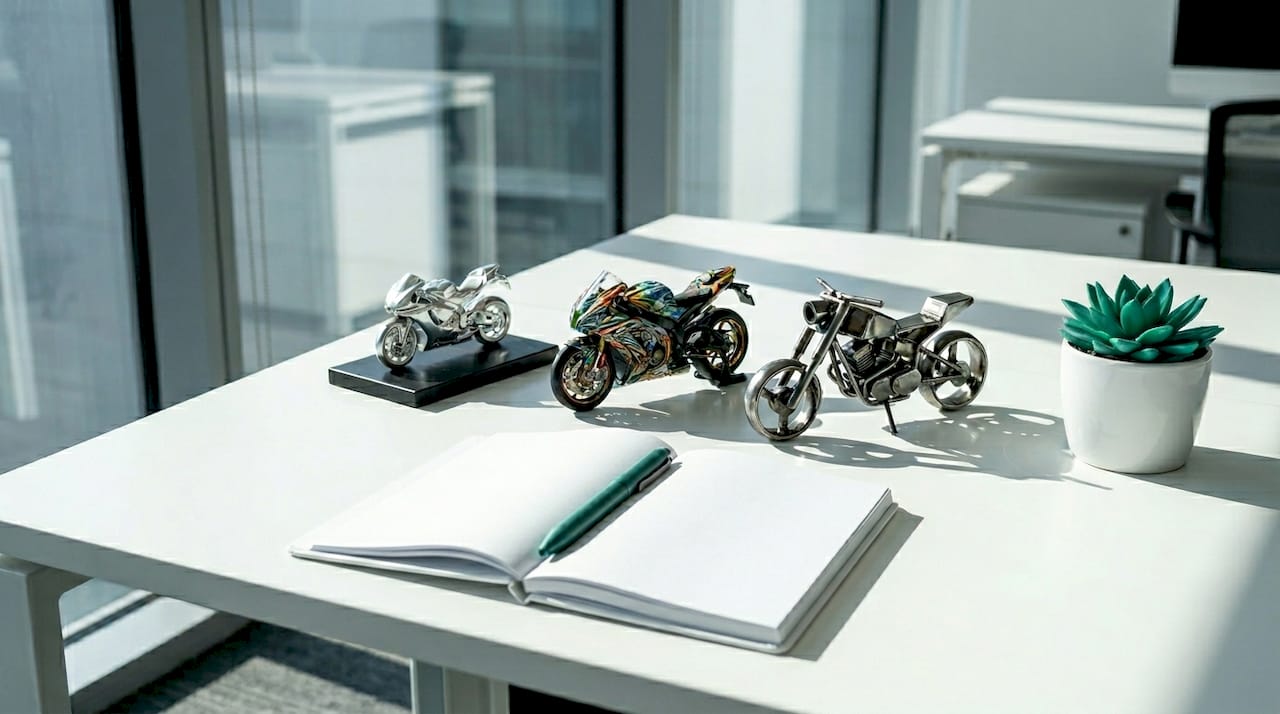
- Resin is the most accessible entry point. It captures fine detail, accepts paint well, and works beautifully at small scales. A 7-inch resin model measuring 3.5 inches high typically retails around $79 with free shipping, making it an easy first purchase for a shelf or desk.
- Steel offers durability and a raw industrial aesthetic. Laser-cut or plasma-cut steel wall panels are popular for home offices and garages because they hold crisp lines and age with character.
- Aluminum is the material of choice for high-end sculptural builds. It’s lighter than steel, highly formable, and takes on an organic quality when shaped by hand.
- Mixed media pieces combine materials for contrast, pairing polished aluminum with raw steel, or resin with metal armatures for dramatic effect.
Scale matters just as much as material. Here’s a quick comparison to help you match scale to space:
| Scale | Typical size | Best placement | Price range |
|---|---|---|---|
| Desktop/shelf | 4 to 12 inches | Desk, bookshelf, display cabinet | $30 to $150 |
| Wall art panel | 24 to 48 inches | Feature wall, home office, garage | $150 to $600 |
| Large installation | 3 feet and above | Studio, showroom, outdoor space | $500 and up |
| Full art bike | Life-size | Gallery, private collection | $10,000 and up |
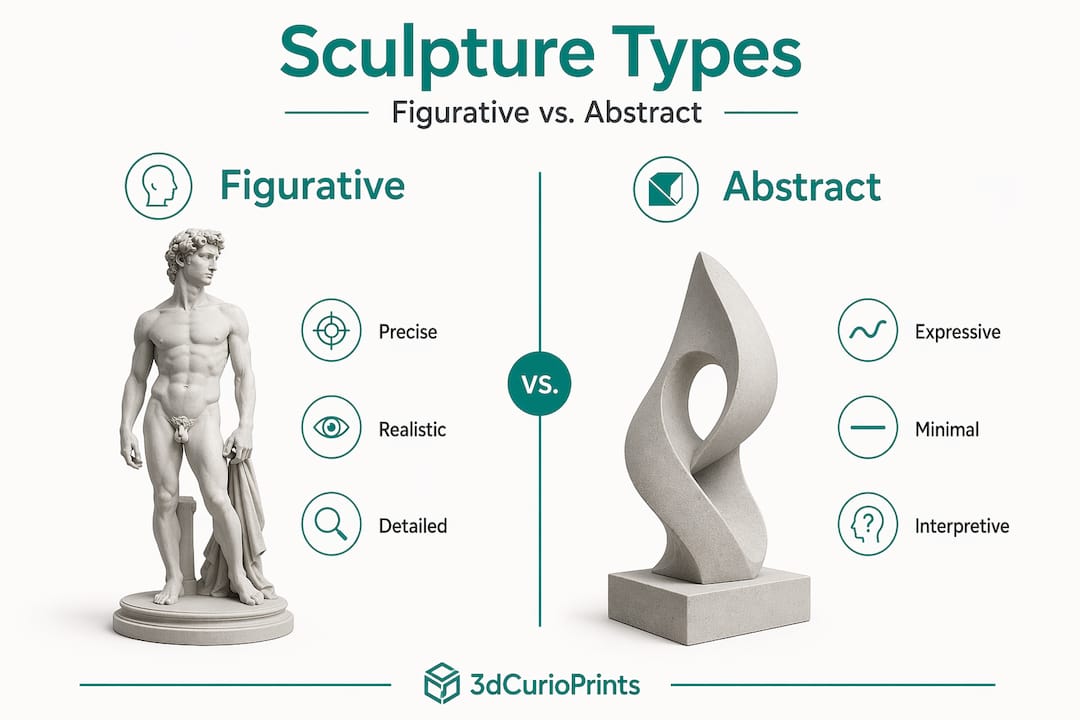
Style is the third axis. Figurative sculptures prioritize accurate representation, capturing the exact geometry of a specific model. Abstract motorcycle sculptures distill the idea of speed, motion, or mechanical power into forms that don’t replicate any real bike. Realistic pieces sit between the two, emphasizing craft and detail without being photographic copies. Knowing which style speaks to you before you shop saves a lot of time and money.
Commissioning a custom motorcycle sculpture
Generic pieces have a ceiling. They can be attractive, but they will never carry the personal meaning of a sculpture built around your specific bike, your color preferences, or your exact vision. Custom motorcycle art closes that gap completely.
The most common custom entry point for collectors is metal wall art. Services like Motosequel’s custom process take your photo or reference image and translate it into a precision-cut 16-gauge steel panel available in sizes from 24 to 48 inches. What makes this process worth understanding is the preview stage. Before any cutting begins, a design preview is sent within 1 to 3 days for your approval. You confirm proportions, stance, and silhouette before the fabricator touches the steel.
That approval step is not a formality. Small variations in the reference image can shift the entire feel of the final piece. A slightly different camera angle changes the rake of the forks. A cropped photo loses the tail section. Reviewing the preview carefully is where you protect your investment.
Here’s a typical custom commissioning process from start to finish:
- Submit your reference. Provide high-resolution photos of your bike from the angle you want captured. Side profiles tend to translate best into wall art.
- Review the design preview. Evaluate proportions and silhouette. Request changes before approving. This is your only chance to redirect the design without additional cost.
- Approve and confirm materials. Choose your steel gauge, finish, and size. Larger panels carry more visual weight but require proper wall anchoring.
- Wait for fabrication. Most reputable services complete custom pieces within two to four weeks after approval.
- Inspect on arrival. Check edges, finish consistency, and mounting hardware before hanging.
Pro Tip: When photographing your bike for a custom commission, shoot at golden hour with the bike on level ground and the camera at hub height. This angle captures the true proportions and gives the fabricator the cleanest silhouette to work from.
The benefit of going custom extends beyond aesthetics. You eliminate the “wrong bike, wrong fit” problem entirely. A mass-produced motorcycle themed decor piece might look close to your machine, but close is not the same as yours.
High-end sculptural motorcycles as collectible art
This is where motorcycle art crosses into territory that serious collectors pay close attention to. A handful of builders and designers have pushed the motorcycle form so far into the realm of sculpture that the distinction between art object and vehicle becomes genuinely blurry.
The Ransom Archangel is the clearest example in the custom build world. Every surface is hand-formed aluminum, hammered and shaped by hand over a 1000cc inline-four engine producing 185 HP. Nothing about it was stamped or cast. The result is a machine that reads as sculpture first and motorcycle second, with flowing bodywork that could hang in a gallery without any mechanical context.
On the concept side, BMW’s Vision K18 takes a different approach. Rather than hiding the engine behind bodywork, the design study exposes a large inline six-cylinder as the visual centerpiece of the entire composition. The 2-meter uninterrupted side panel frames the mechanical components as intentional art elements, not functional necessities. This philosophy, treating the engine as sculpture rather than infrastructure, is what separates gallery-level pieces from decorative replicas.
“The best motorcycle sculptures don’t hide what a motorcycle is. They amplify it. The engine, the frame geometry, the weight distribution — all of it becomes part of the visual argument.” — Ransom Archangel build notes
For collectors operating at this level, mechanical components as art is the defining principle. A piece that treats its engine as a visual centerpiece carries far more emotional weight than one that prioritizes clean surfaces. If you’re building a serious collection, look for works where the artist made deliberate choices about what to reveal and what to conceal.
Displaying motorcycle sculptures: practical considerations
Owning a great piece is only half the equation. Where and how you display it determines whether it reads as art or clutter.
Indoor display considerations:
- Resin figures are sensitive to prolonged UV exposure. Keep them away from south-facing windows or use UV-filtering glass in display cases.
- Steel wall panels can develop surface oxidation in humid environments. A clear coat finish adds years of life indoors.
- Large aluminum sculptures need proper structural support. Consult a contractor before mounting anything over 30 pounds to drywall alone.
- Lighting matters enormously. A single directional spotlight on a metal motorcycle art panel creates shadow depth that flat ambient light completely kills.
Outdoor display considerations:
The durability gap between indoor and outdoor placement is significant. The “Endurance” sculpture in Durango, Colorado illustrates this perfectly. Built from 12,000 steel parts and 28,000 welds, it took three months to construct. After two vehicle crashes in two months, repairs stretched over months coordinated between the artist, the city, and insurance carriers. That’s not a cautionary tale against outdoor sculpture. It’s a realistic picture of what outdoor placement requires in terms of planning and ongoing maintenance budget.
For private collectors placing outdoor bike sculpture in a garden or courtyard, powder-coated steel or marine-grade aluminum are the most practical choices. Both handle weather well, but both still need annual inspection for coating integrity.
Pro Tip: Before placing any outdoor motorcycle sculpture, photograph it from every angle and document the finish condition. This baseline record is invaluable when filing insurance claims or planning touch-up maintenance.
Matching the sculpture to your decor style is worth thinking through carefully. A raw, industrial steel piece looks natural in a converted loft or garage-inspired space. A refined resin figure with painted detail reads better in a study or living room display cabinet. Abstract motorcycle sculptures tend to be the most versatile since they carry less literal visual weight.
My take on what makes a motorcycle sculpture worth collecting
I’ve spent a lot of time around both motorcycle culture and art collecting, and the pieces that hold their value and their emotional resonance share one quality: the artist made a deliberate choice about what the machine means, not just what it looks like.
Mass-produced motorcycle themed decor is everywhere. Most of it is competent and forgettable. The pieces I keep coming back to are the ones where you can see a specific decision in every surface. Why is this section polished and that section raw? Why is the engine exposed here when it could have been covered? Those choices are where the art lives.
Custom commissions are underrated in this space. I’ve seen collectors spend three times as much on a generic limited-edition piece as they would have spent on a custom work built around their own machine. The custom piece wins on meaning every single time. It’s not even close.
The practical side matters too. I’ve watched collectors buy large outdoor sculptures without thinking through maintenance, only to watch a beautiful piece deteriorate over two or three seasons because the finish wasn’t maintained. A sculpture you can actually care for is better than one you can’t. Buy for the space you have, not the space you wish you had.
If a piece makes you stop and look at it twice, that’s the signal. Trust that reaction more than any price point or provenance.
— Dominick
Find your perfect piece at 3dcurioprints
If you’re ready to move from browsing to owning, 3dcurioprints offers made-to-order sculptures and collectibles built with the same attention to detail that serious collectors demand. Their catalog includes desktop and shelf-scale figures as well as larger statement pieces, all available with customization options so the final piece fits your vision rather than a generic template. Customers consistently highlight both the quality of the finished work and the speed of delivery. Browse the full range of custom collectibles and decor at 3dcurioprints and find the piece that belongs in your collection.
FAQ
What materials are most common for motorcycle sculptures?
Resin, steel, and aluminum are the three most widely used materials. Resin suits small collectible figures, steel works well for wall art and large installations, and aluminum is preferred for high-end hand-formed sculptural builds.
How long does a custom motorcycle sculpture commission take?
Most custom metal wall art services deliver within two to four weeks after design approval. The preview and approval phase typically takes one to three days, during which you confirm proportions before fabrication begins.
Are outdoor motorcycle sculptures difficult to maintain?
Yes, outdoor placement requires real planning. Large steel sculptures like the “Endurance” piece required months of repairs after physical damage, with coordination between the artist, city officials, and insurance carriers. Annual inspection of coatings and finishes is the minimum for any outdoor piece.
What size motorcycle sculpture works best for home decor?
Wall art panels in the 24 to 48-inch range work well as focal points in home offices, living rooms, or garage spaces. Desktop resin figures in the 7 to 12-inch range suit shelves and display cases without dominating the room.
What separates a collectible motorcycle sculpture from basic decor?
The defining quality is intentionality. Sculptures where the artist made deliberate choices about which mechanical components to expose and how to integrate them into the form carry far more artistic and emotional weight than decorative replicas that simply copy a bike’s appearance.
Recommended
- Large Set of 2 Cuphead Bust Statues - 10-inch Collectible Figures – 3dCurioPrints
- Large bust 1:1 Terrifier Art the Clown Statue - Life-Size Collectible – 3dCurioPrints
- Large 20" 1:1 Toad Mario Bust - Perfect Fan Collectible Statue – 3dCurioPrints
- Large 10" bendy bust - Customizable Poseable Sculpture for Displays – 3dCurioPrints